Wildlife Walk and Wheel
On the 6th July a group of Coalition staff and members took part in the first of our Thames Water Funded Engaging with Rivers Project. It was a beautiful sunny day and still very hot although we were lucky to have a gentle breeze and some shady paths to keep us cool.
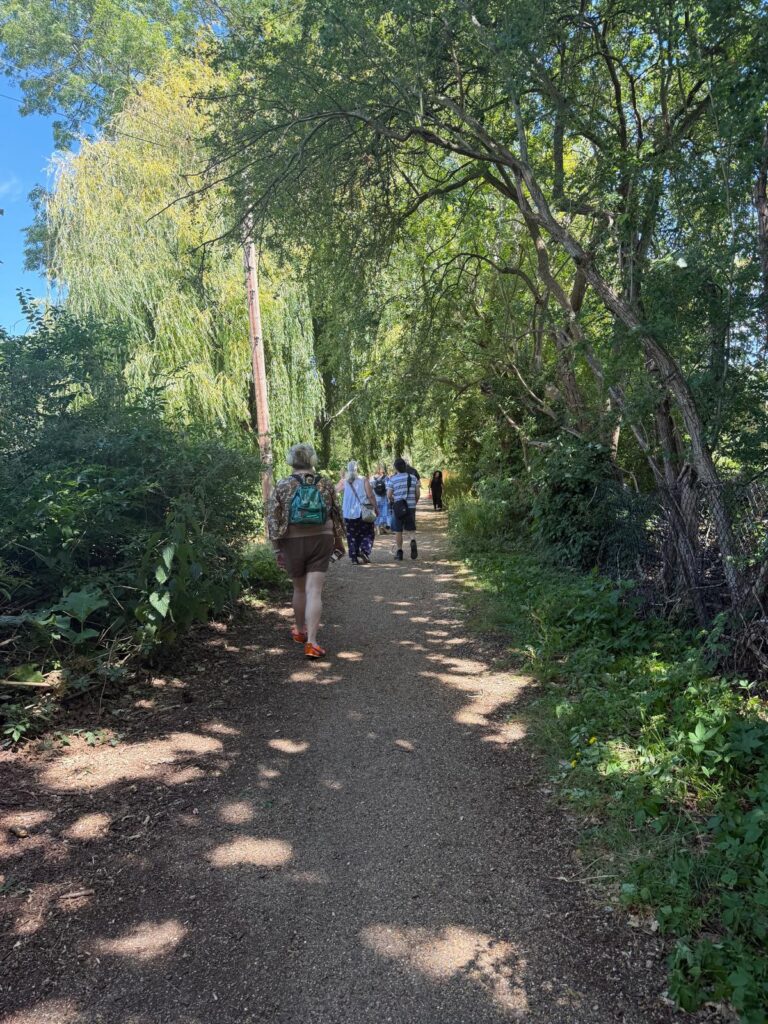
We took advantage of free parking at Leatherhead Leisure Centre and joined the riverside path next to the entrance to Leatherhead football club. At first, we could only catch small glimpses of the river behind the undergrowth, but we soon came to a clearing where we could see and hear the river flowing over a weir and Katy shared some information about the river.
The River Mole is a tributary of the Thames which rises in Rusper, West Sussex and flows north-west for 50 miles through the North Downs and Surrey before joining the Thames at Molesey near Hampton Court Palace. Many believe the river to be so named because in hot summers it disappears underground (more on that later!) but, in fact, it is most likely named after the Latin for mill – “mola” or after Molesey where it joins the Thames.
Much of river catchment area lies on impermeable rock such as Weald Clay and London Clay. This means that rainwater runs off into the river rather than soaking into the ground and the river level and flow can increase rapidly after heavy rainfall. The river cuts through the chalk of the North Downs at the Mole Gap between Dorking and Leatherhead. Now the river flows on permeable chalk with the water table below the level of the river which means the water drains out of the river through swallow holes before rising again when it meets the London Clay. In hot summers the river can dry out completely between Mickleham and Thorncroft Manor!
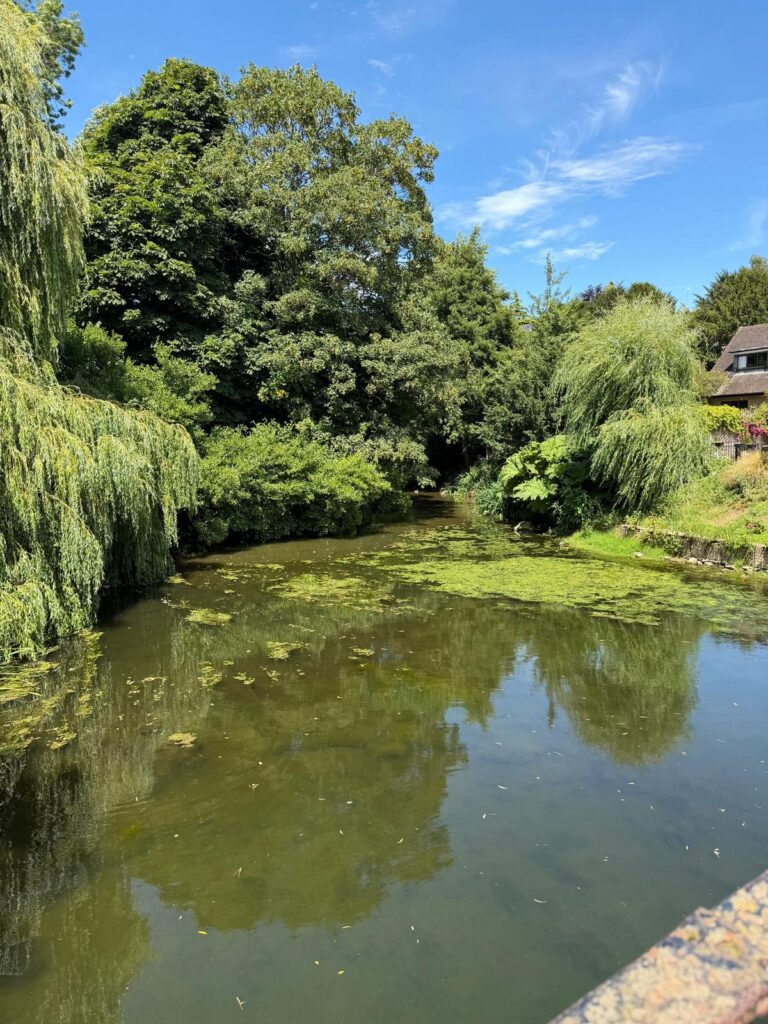
We continued on, grateful of the shade and enjoying conversation with friends before our next stop at the shell bridge. The shell bridge is one of 3 listed bridges in Leatherhead, the others being the 14 arch town bridge and the railway bridge. The shell bridge is a remnant of the Capability Brown landscaped gardens of Thorncroft manor. It is faced with flint and decorated with a large scallop shell. The stretch of river here is designated a natural nature reserve, in fact the length of the river is home to 12 SSSI’s or Sites of Special Scientific Interest.
Although the pollution levels were high in the second half of the 20th Century, significant improvements to the run-off drainage at Gatwick Airport and to local sewage works have dramatically improved water quality and the Mole now boasts the greatest diversity of fish species of any English river. In fact, this stretch of the river supports 20 different species of mammal, 20 butterfly species and 15 species of dragonfly.
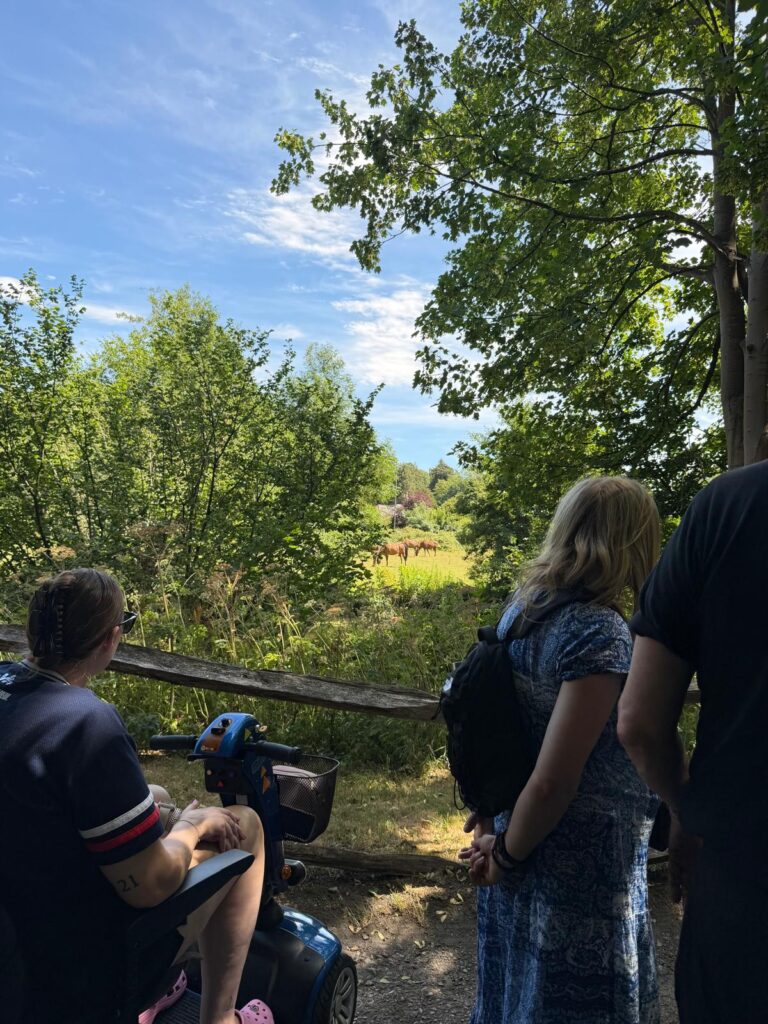
We stopped again at Thorncroft Bridge to enjoy some of the wildlife, spotting an Egyptian goose with goslings, 3 different dragonfly and lots of different fish including brown trout and lots of minnows. Across the river there were horses grazing – it really was a bucolic scene!
Then we turned away from the river past Thorncroft Manor. Now converted into serviced offices, the manor was one of 2 feudal manors in Leatherhead dating back to Norman times. It was rebuilt in the 1770’s to a Sir Robert Taylor design for Henry Crabb Boulton, Lord of the Manor a rich merchant and MP for Worcester and much of this building remains with a modern glass extension to the rear reflecting the older building. During World War II it was used to billet Canadian soldiers and several fortified defences were built along the Mole Gap to protect London from attack from the South. Canadian forces returned to renovate the shell bridge in 1999 and dedicated the work to the memory of Canadian soldiers who served here.
By now we were ready for a cool drink and returned to the leisure centre for refreshments and to continue conversations before heading home!
Interested in joining our future activities? If so, contact Katy to join, or for any questions: Tel/SMS: 07434 865062 Email: katy.hubbard@surreycoalition.org.uk
Contact Information
Address
Surrey Coalition of Disabled People
Astolat, Coniers Way
Burpham, GU4 7HL